
- Price
- Not publicly listed
- Lease
- Financing offered, terms not published
- Price
- Not publicly listed
EMS Swiss DolorClast Radial vs Zimmer enPuls 2.0 / Pro
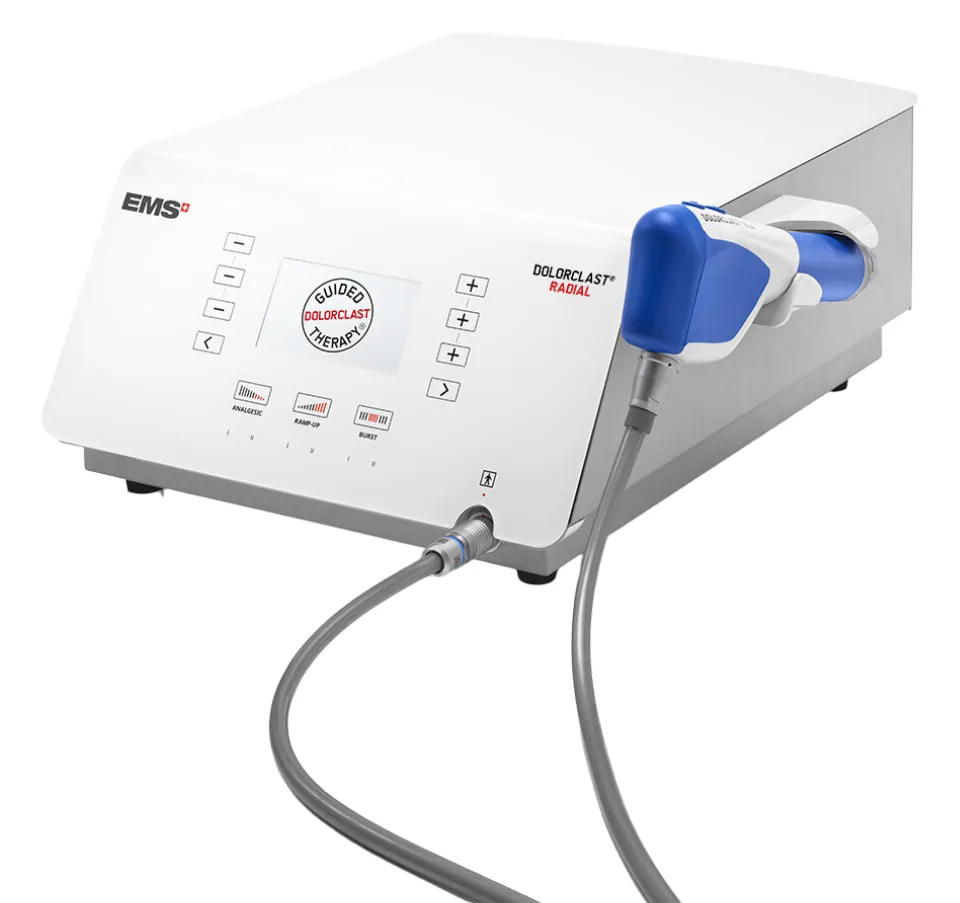
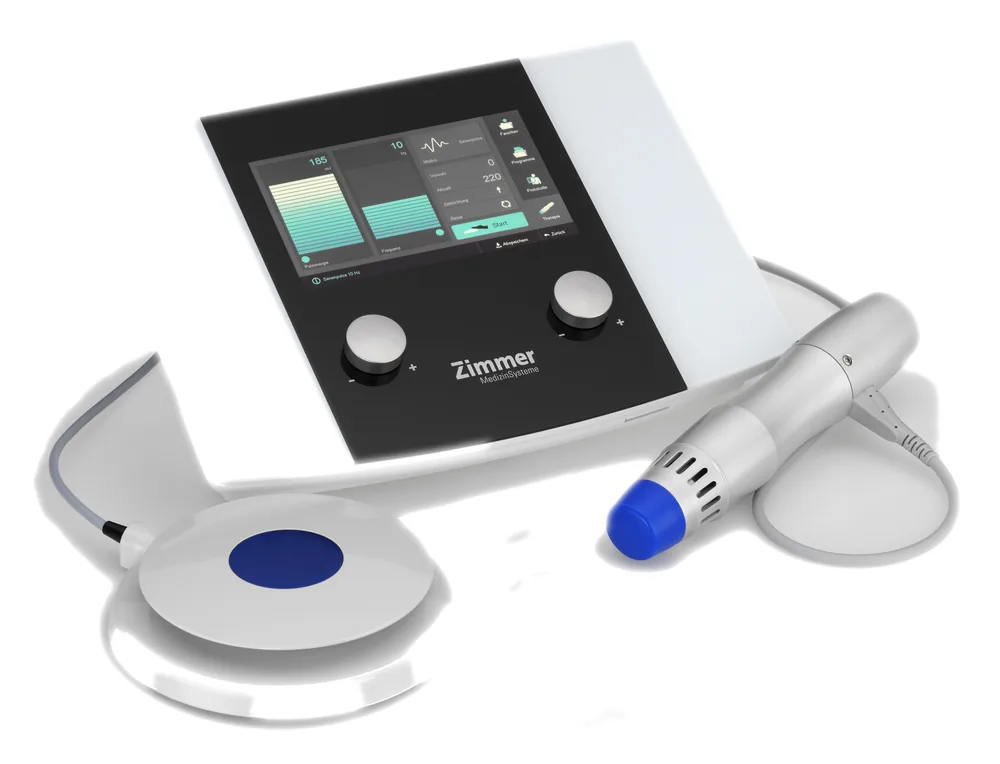
Both the EMS Swiss DolorClast Radial and the Zimmer enPuls 2.0 / Pro put their peak energy at the applicator surface, so they are built for the same clinical job and compare fairly. The EMS Swiss DolorClast Radial uses pneumatic wave generation; the Zimmer enPuls 2.0 / Pro uses electromagnetic ballistic. Neither publishes a purchase price, so both need a written quote. FDA records located: for the EMS Swiss DolorClast Radial, 510(k) K220538 (Class I. Minor aches and pains, temporary increase in circulation, connective tissue activation); for the Zimmer enPuls 2.0 / Pro, no record located.
Specs and prices are estimates based on publicly available data as of September 2026. Confirm details with the manufacturer or seller before you buy.
Side by side
| Specification | RadialEMS Swiss DolorClast Radial | RadialZimmer enPuls 2.0 / Pro |
|---|---|---|
Technology | ||
| Category | Radial pressure wave | Radial pressure wave |
| Wave generation | Pneumaticballistic | Electromagnetic ballisticcompressor-free |
| Energy fieldWhere the peak energy lands | Peaks at the applicator surface | Peaks at the applicator surface |
| Technology as published | Pneumatic ballistic radial | Compressor-free electromagnetic ballistic radial |
Energy outputPressure in bar, energy flux density in mJ/mm² and energy per pulse in mJ are different quantities. A figure in one row never stands in for another. | ||
| Energy flux densitymJ/mm² | 0.29 mJ/mm²at 4 bar | Not published |
| Energy per pulsemJ | 5.9 mJat 4 bar, per the 510(k) summary | 60–185 mJin 10 mJ steps; Zimmer compares the range to 1–5 bar |
| Pressurebar | 1–4 bar | Not published |
| FrequencyHz | 1–25 Hz | 1–22 Hz |
Depth and treatment fieldFocal depth, penetration and focus volume measure three different things. Compare like with like. | ||
| Maximum penetration | 40 mm | Not published |
Applicators and handpiece | ||
| Applicators and transmitters | 7 applicators5 to 40 mm in diameter | 6, 15 and 25 mm headschanged without tools; the enPuls 2.0 ships two 15 mm heads |
| Handpiece life | 5,000,000 pulsesor two years, per the 510(k) summary | 2 million pulseshandpiece warranty |
| Applicator weight | 0.85 kghandpiece | About 1.87 lbhandpiece, with cable |
| Preset protocols | 5 smart protocolsplus 3 modes of action | 7 presetscustomizable |
Size and setup | ||
| Unit weight | 14.5 kg (≈ 32 lb)console; the optional cart adds 18 kg | 6 lb (≈ 2.7 kg)enPuls 2.0, without handpiece |
| Dimensions | 179 × 340 × 452 mmconsole | 12.7 × 9.3 × 5.1 inenPuls 2.0, L × W × H; the enPuls Pro is 7.9 × 13.8 × 11.8 in |
| Configuration | Portable console with two built-in compressorsno external air supply; optional cart | Compressor-free, light chassisfoot switch triggers pulses |
| Other published details | RFID usage tracking and a quick-release pistonmade in Switzerland | 7-inch touchscreen on the enPuls 2.0, 12-inch on the enPuls Prothe Pro weighs 8.4 lb, runs two handpieces and adds a visual analogue pain scale |
Price and buying | ||
| Purchase price | Not publicly listed | Not publicly listed |
| Monthly lease | Financing offered, terms not published | Not publicly listed |
| Warranty and guarantees | Not published | 2 million-pulse handpiece warranty |
| Sales and service | EMS direct, with US distribution partnersUS entity Electro Medical Systems LLC, Southlake, Texas | Strong direct US service channelZimmer MedizinSystems, Irvine, California |
Regulatory recordRecord types and numbers exactly as located. A record covers one configuration and one indication, and never transfers to another product. | ||
| FDA record located | 510(k) K220538 | None located |
| Indication as worded in the record | Class I. Minor aches and pains, temporary increase in circulation, connective tissue activation | No record to quote |
Our notes | ||
| Where it stands out | A clean Class I 510(k) is on file. | Strong direct US service channel and a light chassis. |
| What to check | The labelling is conservative and does not cover broader clinical claims. | No device-specific 510(k) number was found. |
7 further fields have no published figure for either machine.
EMS Swiss DolorClast Radial vs Zimmer enPuls 2.0 / Pro: common questions
What is the difference between the EMS Swiss DolorClast Radial and the Zimmer enPuls 2.0 / Pro?
Both the EMS Swiss DolorClast Radial and the Zimmer enPuls 2.0 / Pro put their peak energy at the applicator surface, so they are built for the same clinical job and compare fairly. The EMS Swiss DolorClast Radial uses pneumatic wave generation; the Zimmer enPuls 2.0 / Pro uses electromagnetic ballistic. The EMS Swiss DolorClast Radial is described as “Pneumatic ballistic radial”, the Zimmer enPuls 2.0 / Pro as “Compressor-free electromagnetic ballistic radial”.
Which is cheaper, the EMS Swiss DolorClast Radial or the Zimmer enPuls 2.0 / Pro?
Neither publishes a purchase price, so both need a written quote. Prices change and estimates are not quotes, so confirm both in writing.
Are the EMS Swiss DolorClast Radial and the Zimmer enPuls 2.0 / Pro FDA cleared?
FDA records located: for the EMS Swiss DolorClast Radial, 510(k) K220538 (Class I. Minor aches and pains, temporary increase in circulation, connective tissue activation); for the Zimmer enPuls 2.0 / Pro, no record located. A record covers one configuration and one indication, and never transfers to another model, so check it against the exact configuration you are quoted.
How do I choose between the EMS Swiss DolorClast Radial and the Zimmer enPuls 2.0 / Pro?
Start with the clinical job, then ask both vendors for the same five things in writing: the exact model, revision, and which accessories are included at that price; contract term, APR, total payments, and the buyout option at the end; handpiece and consumable life, and what a replacement costs; warranty coverage and US service turnaround time; the exact FDA clearance number and the current labelling for the configuration being quoted.
More comparisons
EMS Swiss DolorClast Radial vs
Still deciding?
Talk it through with our equipment team
Tell us about your practice and caseload. We will help you weigh the options and send lease and purchase estimates for the machines we sell.